


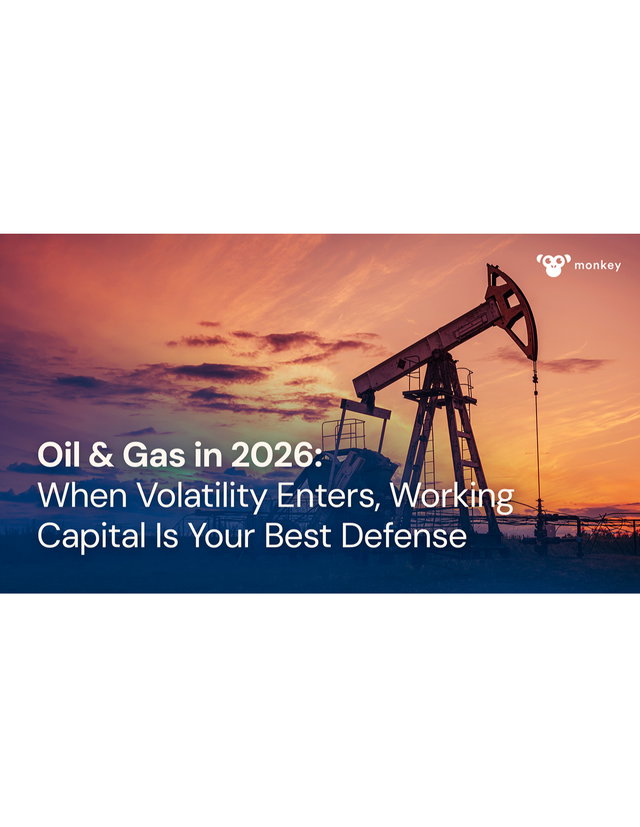
Content Summary
Access this content
Choose an option below
Your content has been opened.
Register to access this content
Verify your email to access this content
Code sent. Enter it in the modal
Your content has been opened.
Why do I need to verify I’m human?
Please verify you are a human before opening this content.
Your content has been opened.
The content will open in a new window. You may need to allow popups for this site.
Check your inbox
Oil & Gas in 2026: When Volatility Enters, Working Capital Is Your Best Defense has been emailed to . Entered the wrong email?
Don't see the content in your inbox?
Make sure to check your spam and other messages folders.
Can't get to your email right now?
By accessing content on the AFP Treasury and Finance Marketplace you agree to our Terms of Service and Privacy Policy; and, you acknowledge that your information may be shared with the content publisher.
You might also be interested in

Your Finance Team Is Losing Weeks to Busywork. A Unified Platform Gets That Time Back.
Count the hours your team spends re-keying invoice data, hunting for approvals buried in email, and reconciling numbers between systems that were never built to talk to each...
Read More
Supply Chain Finance for Food, Beverage & Retail
Grocery prices in the US remain nearly 30% above pre-pandemic levels, and price is now the main battleground in food, beverage and retail. That pressure squeezes margins across...
Read More
How Metals & Mining Leaders Financed $23B+ in Supplier Payments Without Adding Debt
Steel and ore move on tight margins, and the working capital behind them moves even tighter. Allianz Trade expects global business insolvencies to climb for a fifth straight year...
Read More




